
Pohela Boishakh mark the first day of the Bengali calendar year. Celebrated with tremendous enthusiasm and colorful festivities, it serves as a unifying cultural bridge across Bangladesh and the worldwide Bengali diaspora. Unlike many festival traditions tied to religious beliefs, Bengali New Year is a secular cultural celebration deeply rooted in Bengal’s rich agrarian history, heritage, and identity.
Quick Overview
| Key Aspect | Details |
|---|---|
| Event Name | Pohela Boishakh (বাংলা নববর্ষ) |
| Date | April 14 (Fixed in Bangladesh official calendar) |
| Significance | First day of the Bengali Solar Calendar |
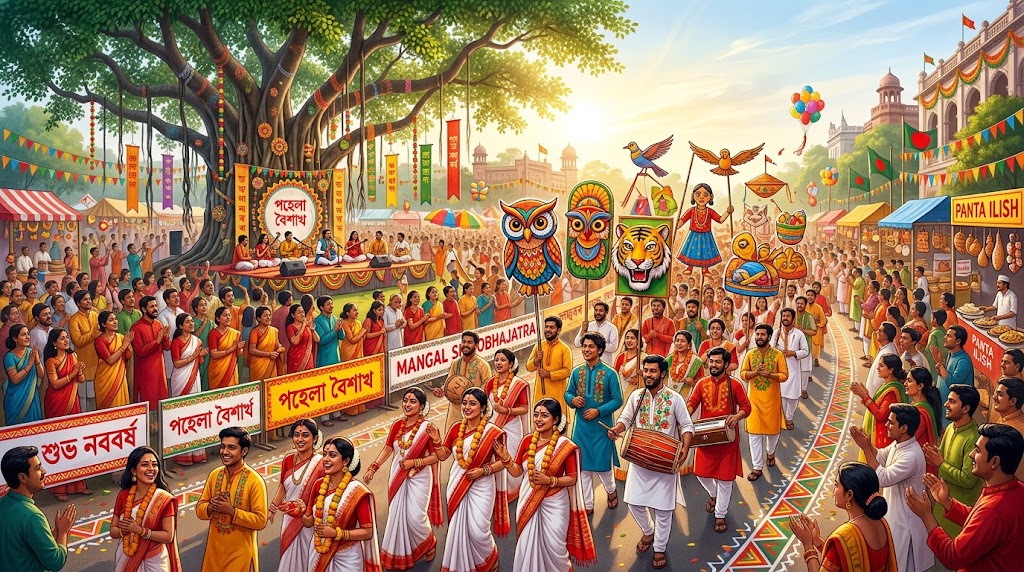
| Key Attractions | Mangal Shobhajatra, Halkhata, Panta Ilish, Cultural Shows |
| UNESCO Recognition | Inscribed as Intangible Cultural Heritage of Humanity (2016) |
Historical Background and Origins
The origin of the Bengali calendar (Bangabda) dates back several centuries, with historical records primarily attributing its modern standardization to the Mughal Emperor Akbar in the 16th century.
- Tax Collection Optimization: During Mughal rule, land taxes were collected according to the Islamic lunar calendar. However, because the lunar year is shorter than the solar agricultural cycle, farmers struggled to pay taxes before harvest time.
- Creation of Fasholi Shan: To solve this conflict, Emperor Akbar requested his royal astronomer, Amir Fatehullah Shirazi, to combine the Islamic lunar calendar with traditional Hindu solar calendars. This resulted in the creation of the Fasholi Shan (Harvest Calendar), which later evolved into the modern Bengali year.
- The Tradition of Halkhata: Historically, traders and merchants opened a new ledger book called the Halkhata on the first day of the year. They invited customers, offered them traditional sweets, and settled old financial debts to start a fresh financial record.
Traditional Celebrations and Iconic Elements
The festivities of Pohela Boishakh begin at dawn with traditional songs, cultural gatherings, and colorful parades across the country.
[ Cultural Music at Dawn ] ➔ [ Mangal Shobhajatra Procession ] ➔ [ Traditional Panta Ilish Feast ] ➔ [ Halkhata & Local Fairs ]
1. Chhayanaut’s Morning Gathering at Ramna Batamul
The iconic musical event hosted by Chhayanaut at Ramna Park in Dhaka marks the official start of the morning celebrations. Artistes gather under the historic Banyan tree (Batamul) to welcome the new year with Rabindranath Tagore’s famous welcoming song, “Esho He Boishakh”.
2. Mangal Shobhajatra
Organized by the students and faculty of the Faculty of Fine Arts (Charukala) at the University of Dhaka, Mangal Shobhajatra is a massive, colorful street procession featuring large handcrafted motifs, traditional giant masks, and puppets.
- Symbolism: The motifs—ranging from owls, birds, and tigers to traditional folk elements—represent peace, hope, and the collective struggle against injustice and darkness.
- UNESCO Honor: In 2016, UNESCO officially recognized Mangal Shobhajatra on its Representative List of the Intangible Cultural Heritage of Humanity.
3. Panta Ilish: The Traditional Culinary Delight
A staple culinary highlight of Pohela Boishakh is Panta Ilish. It consists of leftover rice soaked in water (Panta Bhaat), served with fried Hilsa fish (Ilish), green chilies, onions, and various traditional mashed condiments known as Vorta. This dish honors the humble traditional diet of rural Bengali farmers during the hot summer season.
Economic and Social Importance
Pohela Boishakh plays a significant role in boosting Bangladesh’s local economy and promoting social solidarity.
- Boost to Local Handicrafts: Artisans, weavers, and local craftsmen work months in advance to prepare traditional pottery, handloom sarees (Tant), Panjabis, and wooden toys sold at local seasonal fairs (Boishakhi Mela).
- Retail and Fashion Surge: The festival marks one of the largest shopping seasons in Bangladesh, with fashion houses releasing dedicated red-and-white Boishakhi collections.
- National Harmony: People from all walks of life—regardless of religion, age, or socioeconomic status—wear traditional red and white attire to join the festivities together.
Conclusion
Pohela Boishakh is far more than a simple calendar change; it is a timeless celebration of Bengali language, heritage, and communal harmony. As Bangladesh advances into the modern era, the festival continues to preserve ancient folk traditions while reminding future generations of their cultural roots and shared identity.